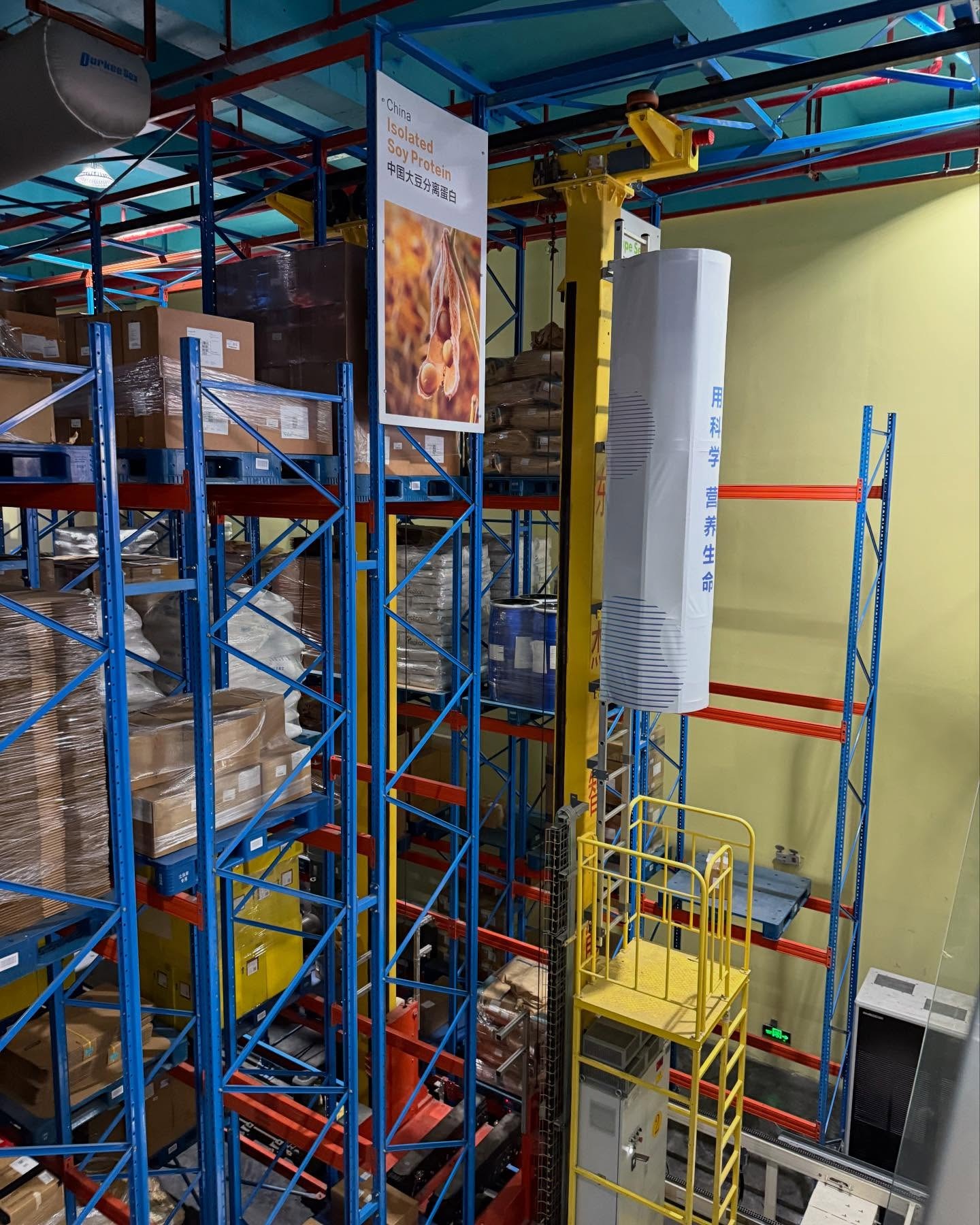
The ASRS demo that started the thinking — the machine is impressive; the coupling is the work.
The robot arm is the easy part.
Everyone gets excited about the robot. The ASRS crane. The autonomous forklift. The machine that picks and packs while the vendor demo shows a warehouse running itself like a Swiss watch. It's the sexiest line item in the budget, and it's the one everyone in the room already agrees on.
And then you buy it, and you find out the robot was never the hard part.
The hard part is the software that tells the robot where the inventory actually is, what's in each bin, where the order needs to go, and how the whole thing reconciles with your ERP, your WMS, your storefront, and the carrier waiting at the dock. That layer — the coupling between the machine and everything else — is where warehouse automation projects go to die. And it's the part nobody budgets for, because nobody demos it.
/ The Demo Shows the Machine, Not the Plumbing
A vendor demo shows you the robot moving. What it doesn't show you is what happens when the inventory count in your system says there are three of an item and the bin physically holds one. What it doesn't show you is what the robot does with a mislabeled box, a damaged return, or an order that got edited after it was picked.
The robot will happily execute whatever it's told. The problem is that "what it's told" is only as good as the data feeding it, and warehouse data is messy. It's always messy. SKUs don't match across systems. Locations drift. Counts go stale. The moment you bolt an expensive robot onto a data layer that was never clean enough to automate against, the robot becomes a very fast way to make the wrong thing happen.
/ Automation Doesn't Fix a Process; It Amplifies It
Here's the uncomfortable part. Automation doesn't make a broken process better. It makes it faster and more consistent — including the broken parts.
If your warehouse runs on tribal knowledge — "ask Dave, he knows where that bin is" — a robot can't execute against that. So you have to write the knowledge down first, which means you have to actually understand the process before you automate it. Most companies skip that step. They buy the robot to skip the hard thinking, and then the robot forces them to do the hard thinking anyway, mid-project, with a seven-figure machine already on the floor.
The cheap version of this is AI. The reason people keep saying "start with the data" is that it's true. Before you automate the motion, you automate the decision — and the decision is only as good as the data behind it.
/ Where the Money Actually Goes
If you're planning a warehouse automation project, budget for these before you budget for the hardware:
Data reconciliation. Your ERP, WMS, and storefront all have their own idea of what's in stock. Getting them to agree — and keeping them in agreement as orders flow — is real engineering work, not a config checkbox.
Exception handling. The robot will hit the case that isn't covered. Someone has to decide what happens next, and if that someone isn't defined, the robot just... stops. A stopped robot is more expensive than no robot.
Integration. The robot talks to your WMS, which talks to your storefront, which talks to the carrier. Every one of those connections is a place where a project slips by months.
The long tail. Automation changes the org. The pickers who used to do the work now supervise the machine. That's a different job, a different schedule, and a different training plan.
None of that shows up in the vendor's quote.
/ The Rule
The robot arm is the easy part. The software and the data are the project. If your budget has more lines for hardware than for the integration that makes the hardware honest, you're not automating a warehouse — you're buying a very expensive thing that's going to sit there and remind you every day that you skipped the hard part.
Automate the data first. Then the machine is just an arm that does what it's told.
Until the next run out — work hard, play hard.