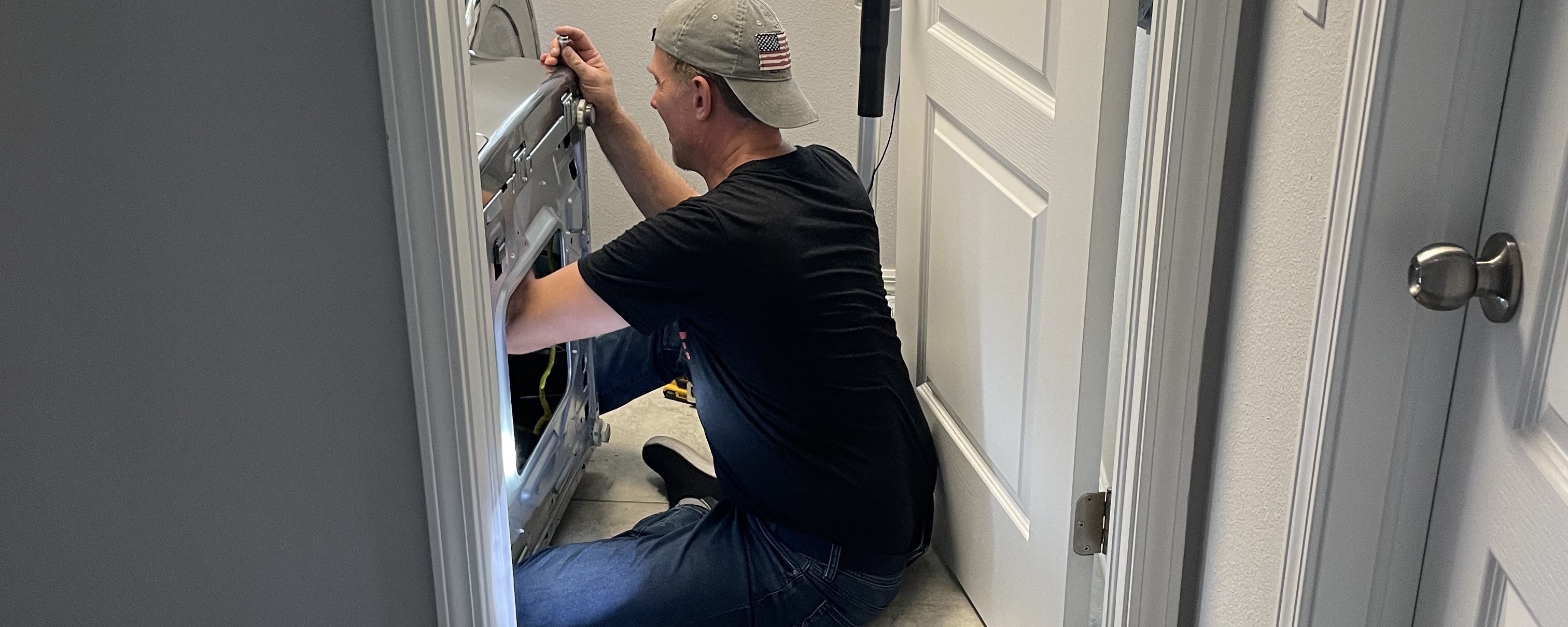
Sometimes you can't fish, you fix your washing machine. That was the trade this weekend: the boat plan fell through, and the machine had been walking itself across the laundry room for weeks. A washing machine that sounds like it's trying to roll around and go through the floor does not get to win an argument forever — so Saturday, it lost.
/ The $900, $500, and $34 options
Here's the menu on a shaking, banging washer. Option one: buy a new one — north of $900 once the good ones are on sale. Option two: pay someone $500 to fix the old one, which is somewhere between a third and a half of a brand-new machine for a repair visit. Option three, which did not officially exist in my head until that morning: fix it myself.
I didn't want to spend $900 on a new washing machine, nor pay someone $500 to fix the old one. So I did what any self-respecting AI-assisted person does in 2026 — I described the symptoms to Claude. Bang, walk, rattle at spin speed. It walked me through the checks, and we quickly figured out it was $34 worth of parts: four new shocks.
Washing machines have shocks?! Apparently they do. Four of them, holding the tub from rocking itself into another room at spin speed. Mine were spent, the tub was wandering, and the whole cabinet was absorbing the drama. Next-day delivery from Amazon. Boom. I ordered them.
/ The printed instructions and the one-week delay
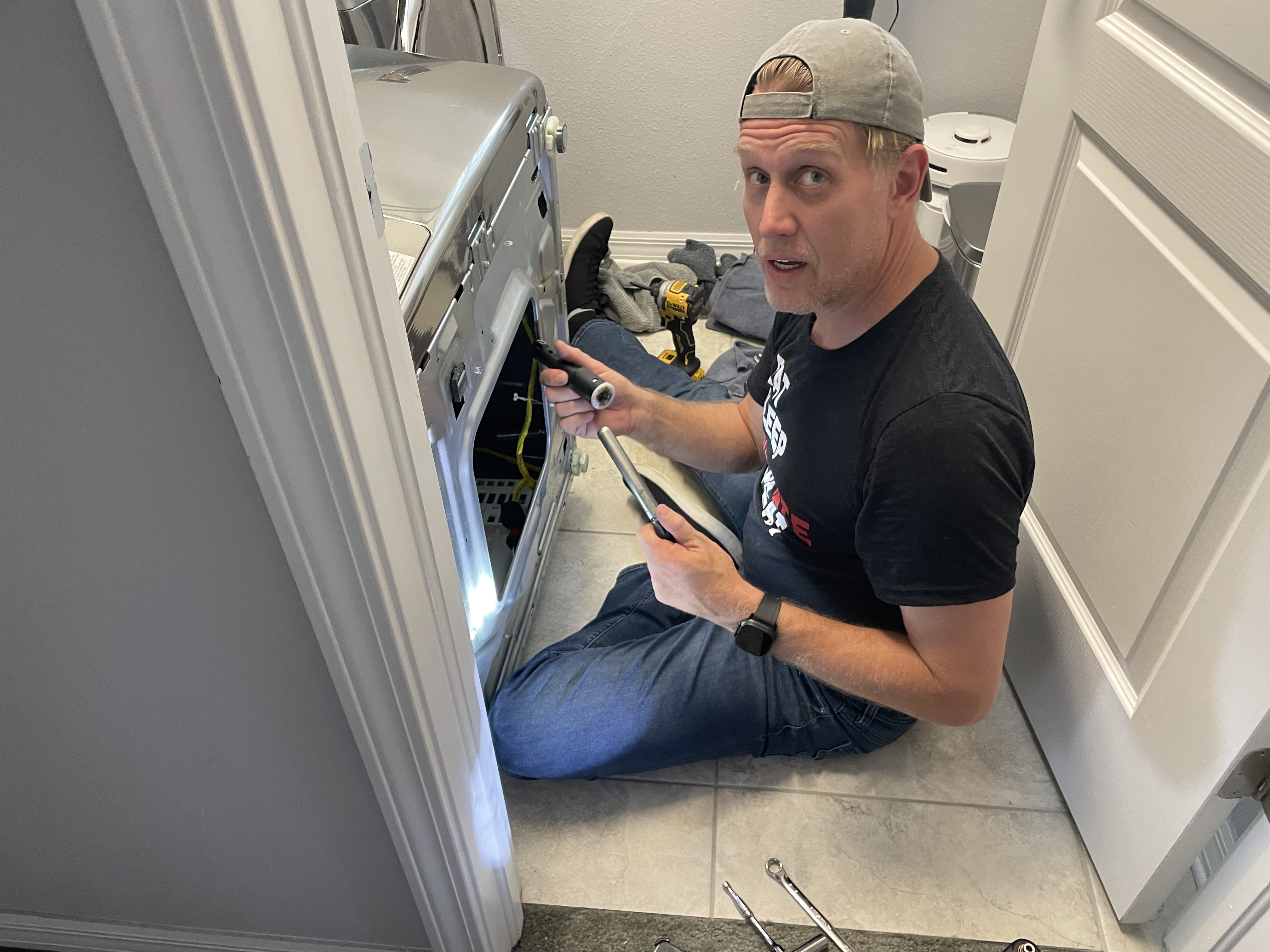
Then I printed out the how-to — yes, printed, off the internet, paper version, so it doesn't sleep, lock, or autocorrect while my hands are full. The parts landed the next day.
And then… a week passed. Yes, I was busy. The box of four shocks sat there, the machine kept walking, and life kept interrupting. When I finally got to work, the first lesson arrived fast: 20 minutes in, I knew I had a problem.
/ Where is the 13mm crescent wrench
My ADHD self couldn't remember where I put the 13mm crescent wrench. If you know, you know — it's not that the tool doesn't exist, it's that it exists in a place I will only remember after the project is over. Easy solution — go to Home Depot. That's the official ADHD fix: it's always cheaper to buy a new tool than to find the old one, and somehow it's even true, because the old one will still be missing on Tuesday.
40 minutes later, wrench in hand, I was back to fixing it. The whole detour cost less than the parts.
/ Four out, four in
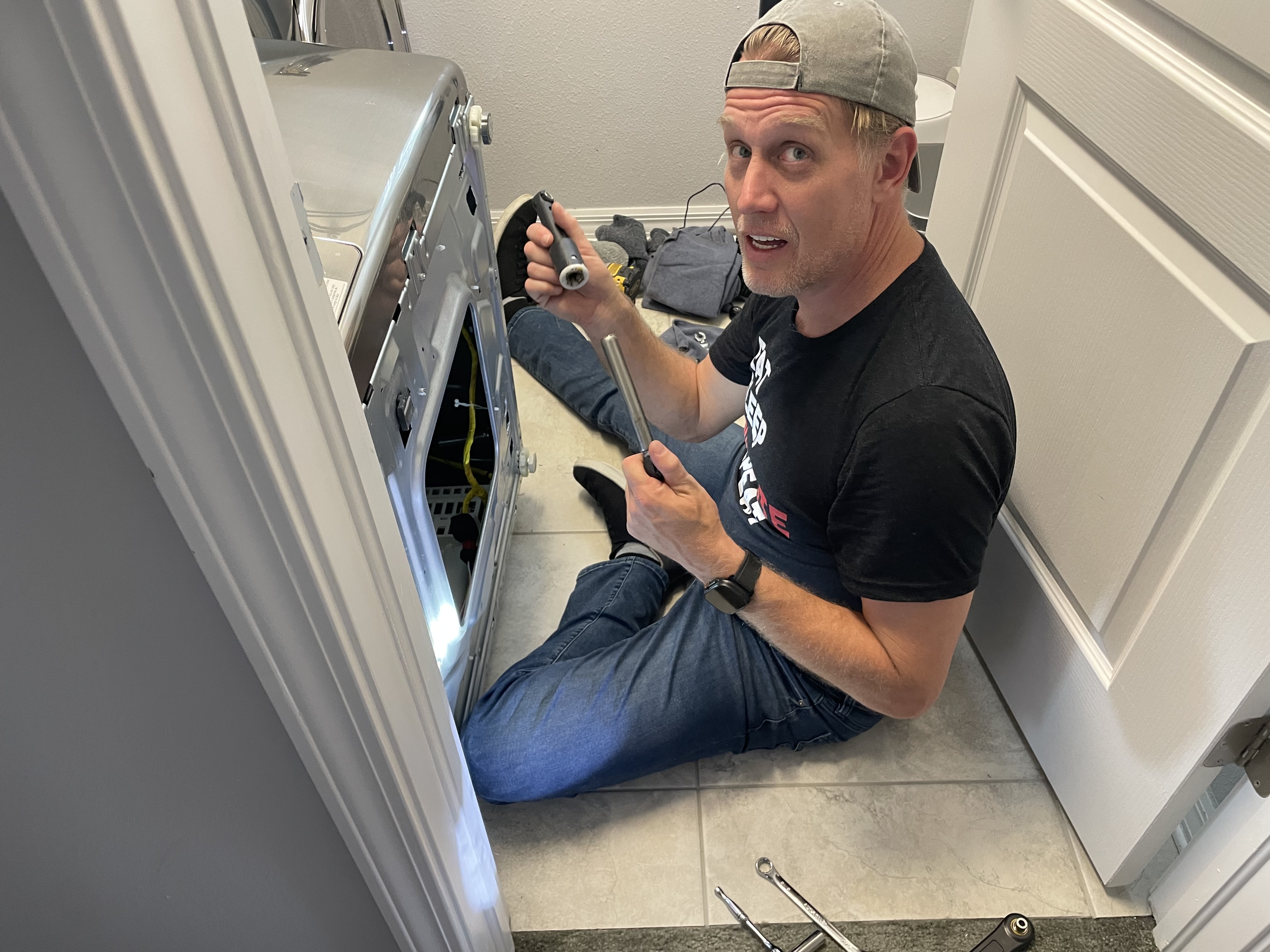
It was a tight space, and a pain in the butt — a laundry closet the width of a phone booth, the machine tipped and open, and every bolt in a place your wrists were not designed to reach. But really — it wasn't hard. Hard is a strong word for what was mostly awkward.
I got all 4 removed, 4 new ones put back in — being very careful to put the front ones in the front, and the rear ones in the rear, because the front and rear shocks are different, and "they looked the same" is exactly the kind of thing that bites you at reassembly time. Which I, an expert in self-inflicted reassembly surprises, did not gamble on.
/ The moment of truth
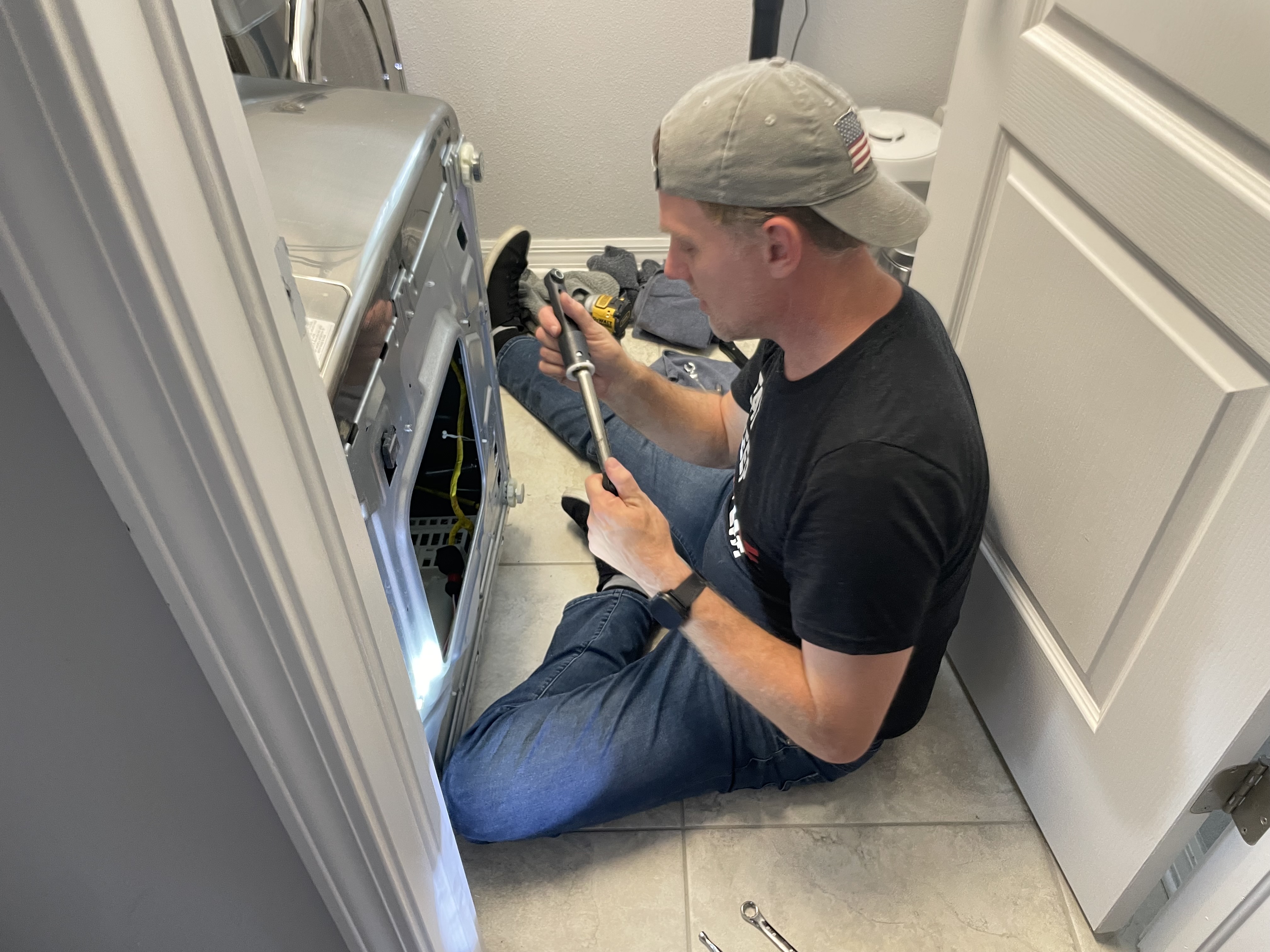
Got it all plugged back in, started it up, loaded a spin cycle — and watched. And listened. It no longer sounds like it's trying to roll around and go through the floor. Quiet tub, boring spin, done. #Win.
Total damage: $34 in parts, one impulse Home Depot wrench purchase, and a Saturday that was supposed to be on the water. Total avoided: $900 plus a delivery appointment, or $500 plus waiting for a tech who'll charge half the former to do exactly what I just did.
Sometimes the best solution isn't to have someone else repair it, nor is it to replace it. Just get under the hood and fix it.
/ Why this is a systems story, not an appliance story
Strip out the suds and this is the same economics I live in at work. In almost every broken thing — a washer, a flaky integration, a slow pipeline — diagnosis is the expensive part and the fix is the cheap part. The $500 repair quote isn't five hundred dollars of wrenching; it's four hundred and seventy dollars of "let me figure out what's wrong" and thirty dollars of parts. The $900 replacement isn't new hardware, it's the tax on not knowing the hardware is fine.
That's the part that's actually changing. Ten years ago, "ask someone who knows" meant a phone call, a service visit, or a forum thread from 2014 with a half-answer. Now you describe the symptoms to a model that has read every service manual, every forum, and every failed-fix confession ever posted, and it gives you a ranked list of suspects in ninety seconds. Claude didn't just tell me to buy shocks — it told me why a walking washer means spent shocks, what to check first, and to keep the fronts front and the rears rear. That's the service call, compressed.
The other half is cultural, and it's the half leaders control. Somewhere along the way, "call someone" became the default answer for everything that isn't your literal job title — and the org chart quietly absorbed the cost of that habit in labor hours, replacement decisions, and vendor dependency. I'm not saying run your company on DIY. I'm saying the people who get under the hood once in a while are the ones who know what's genuinely broken, what's actually worth replacing, and who's quoting them a service call's worth of guessing.
The machine is fixed, the laundry room is quiet, and the fishing will happen another Saturday. Until the next run out — work hard, play hard.